Friday, October 29, 2010

Interview with author Brian Thornton

Welcome, Brian, to our writing blog. We’re excited to hear about your writing journey and how, as a history teacher, you decided to write informational non-fiction books for kids and adults.


Heather: First of all, congratulations on your review from the Washington Post for your most recent book, The Book of Bastards: 101 Worst Scoundrels and Scandals from the World of Politics and Power. The title alone pretty much describes what the book is about, but I loved this quote from the Post: “The wonder is that Thornton, a Seattle-based teacher who has stood before students at every level from sixth grade to college, finds only 101 bastards in our more than 200-year history. I smell a series.” So let’s talk about that first. Is there a sequel in the works?

BRIAN: The short answer is ‘yes, there is a sequel of sorts in the works for The Book of Bastards’. The longer answer is more complicated. The Book of Bastards deals solely with political corruption/economic villainy in American history, and while it would have been easy to populate the pages of several more books with American bastards, we’re doing something a little different with the follow-up, a book with a working title of The Book of Ancient Bastards. This one deals with historical bastards from the ancient and medieval worlds. Roman emperors and medieval popes alone give us a rich tradition of notorious bastardry on a much earlier stage.

Heather: As a history buff myself, that one sounds very interesting! Your latest release is for adults, but you also have a series you write for kids called Everything Kids Series. Tell us how being a history teacher led to writing these books.
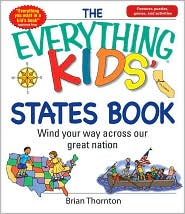


BRIAN: I was actually brought in to write those two books after my publisher (Adams Media) had already established a readership with its broad-based Everything Kids series. The Everything Kids’ Book of the States and The Everything Kids’ Book of the Presidents constituted a two-book deal of the type that the publishing industry calls “work-for-hire.” So since it wasn’t my original idea, and I didn’t pitch the work to the publisher, I don’t receive royalties, ebook/foreign rights, or anything along those lines for these projects; just a straight fee for writing the two books.

What happened was that an acquisitions editor at Adams Media was casting about for a history teacher to write these books, talked to my editor/long-time contact there, and was referred to me. I was just wrapping up an extensive and exhausting project (Teacher Miracles) and didn’t initially have much enthusiasm for taking on anything new. But the subject matter appealed to me, and it was hard to say “no,” when they came back with another offer.

So I wrote those two books (40,000 words apiece) in eight weeks. They turned out quite well and I was very pleased with the end result (even though they were work-for-hire, I came up with the chapter layout templates and quick information pieces myself. That was also a fair amount of work.). 2006 was a busy year for me. I wrote those two books and edited another one, all while also working a full-time job.


Heather: Wow—that’s amazing. No more excuses for not finding time to write. The more I meet other authors, the more I realize how versatile they are. This includes you! Tell us about what led you to compile the inspirational book, Teacher Miracles: Inspirational True Stories from the Classroom.
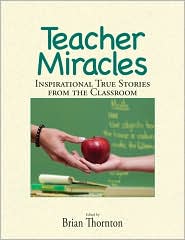


BRIAN: That book was probably more work (acting as the collection editor, soliciting stories, editing and re-editing them, etc.) than the actual writing of any two of my other books combined. I’m very proud of the end result, and of the fabulous teacher/authors with whom I worked to put that volume together. Many of them were first-time authors, and you wouldn’t have known it to read the end-result.

Heather: Teachers are amazing, and I’m glad you did the work to bring that book to the public. Non-fiction, history topic books aren’t you only forte. You’re published in a Noir Mystery anthology centered on stories that take place in Seattle. Are you dabbling, or are you pursuing the mystery genre as well? After all, I did meet you at Bouchercon—a mystery writers conference.

BRIAN: I don’t know many writers these days who don’t wear many hats. You can’t afford not to in the current publishing climate, especially when you’re getting offered money up-front for doing it.

I actually started out intending to be a mystery writer. I began work on my first novel in 1998 and finished it three years later, after any number of many false starts and detours.

I learned a lot from writing that novel; most importantly, I learned how not to write a novel. I also learned that writing is hard work, and that I had a lot of company in having written an initial novel that was more instructive than publishable. Authors even have a name for it: your “mistake novel.”

But I kept at it, revising that first novel, and taking the advice of a friend who worked in marketing, began to network. In 2004 came the opportunity to publish my first piece of nonfiction. Nonfiction has kept me hopping ever since.

During all that time I haven’t stopped working on fiction. But eight books in six years takes a toll on both your schedule and your energy level, so most of the things I wrote to continue honing my fiction chops were short stories. A couple of publications in Alfred Hitchcock’s Mystery Magazine led to my being asked by collection editor Curt Colbert (author of the Jake Rossiter novels) to submit a story for consideration for publication in Akashic Books’ Seattle Noir.

I dusted off an idea I’d had about back in grad school, while doing research on the Immigration and Naturalization Service’s profiles of Chinese immigrants looking to get around restrictive immigration laws back during the 1890s. The result was a short story called “Paper Son.”

And I’m getting back to fiction work once I wrap up The Book of Ancient Bastards. I’ve got a final draft of a mystery (this one a historical that takes place in 1840s Washington, D.C.) to finish.


Heather: I have one of those “mistake novels” (in fact, about 3). Your 1840’s DC mystery sounds very interesting. Every writer wants to know how an author got started and how he/she landed a publishing contract. What was your experience? Do you have an agent? Or did you submit directly to a publisher? Also, was Adams Media your first publisher?

BRIAN: In 2004 I got an opportunity to publish my first book. One of those connections I mentioned above was an editor who needed a book written about Abraham Lincoln by someone with a background in History. I have an M.A. in American/European History, so I fit the bill. The editor had read a draft of my “mistake” novel (God love her), and knew that I could write a good sentence. She asked me if I’d be interested in writing this one book on Lincoln as “work-for-hire.” I agreed to do it, thinking this would be a one-off.

Six years later I’ve got eight nonfiction books to my credit. This includes one that I’ve ghost-written for someone else, another that I wrote for the publisher (and for which I was paid), that they wound up “repurposing” into content for another book of theirs (when you write “work-for-hire,” you don’t control the presentation/publication of the work in question).

And that’s how I got my start. Adams Media was in fact my first publisher, I did submit directly to the publisher (although my work was solicited, rather than the result of a cold query). I didn’t have an agent to start with; I negotiated my own contracts for years because I didn’t have much time (I thought) to hunt for an agent. I do have an agent now, and my contracts/benefits/payouts are the better for it. She more than earns her cut.


Heather: You never know when a good relationship with an editor will pay off. And finally, what are the top three pieces of advice you’d give an unpublished writer?

BRIAN:
1. Thornton’s First Law: it costs you nothing to be gracious. If you’re going to ask someone for something (see networking below), be polite. Most authors I know are ridiculously generous with their time and sharing connections (it’s in their best interests to do so), but don’t ask to be referred to the agent of someone you just met, whose work you’re not familiar with, and who is just as busy trying to get ahead with their publishing career as you are.

2. Network, network, network. Join writers’ associations. Sisters in Crime has a great program for mentoring budding authors called “guppies.” International Thriller Writers has something similar (not too familiar with this one though). I got my first book contract as a direct result of a connection I made through Mystery Writers of America. It pays dividends, and it’s a great opportunity to make friends with other like-minded folks whose spouses/significant others’ eyes glaze over when they start trying to explain the plot of their latest novel to them.

3. Lastly, don’t screw around with negotiating your own contracts. If you get offered a boilerplate contract (as I have been repeatedly) by a publisher and you’re un-agented, MAKE THE TIME to beat the bushes for an agent. Anything you can negotiate (especially with little or no publishing track record) your agent will be able to improve upon. Don’t be afraid to ask for agent referrals; most agents only take on new clients that way. Of course, it’s a lot easier to request a referral from an author who knows and likes/respects you than it is to try to get one from one who’s signing you just attended.


Heather: Great advice, Brian. Amen 3x! Thanks for the interview, and I wish you all the best.

You can visit Brian's Blog Here

Or check out all of his books here.

Monday, October 25, 2010

What's everyone's good news?

Once in awhile we need good news.

Yesterday, a client of ours told me that she just got her first request for a "full" from an agent after Julie Wright revamped her query. For more info about the rejection game, read here.

So let us know if you have good news! And, as always, let us know if you have an upcoming release, and we'll post your cover on our blog.

These past couple of months have been extra busy for three of our editors. Annette Lyon, Julie Wright, and Josi Kilpack have all had book releases. Congrats ladies!


Thursday, October 21, 2010

Write-A-Thon Contest!

On Tuesday, November 2, 2010, Precision Editing Group will be sponsoring our 2nd Write-a-Thon and we're inviting writers to show us how many words you can write in 4 hours! This will also be a great kick off for those of you who are doing NaNoWriMo.

The contest will open at 4:00 Mountain Daylight Time and end at midnight (You choose the best 4 hours during that period of time, or break it up and track your time). The person who writes the most words will receive their choice of a $50 Amazon.com gift card OR a 50 page content edit by one of the Precision Editing Group Editors.

Here's how it will work:

1-The Write-a-thon will officially begin at 4:00 Mountain Daylight Time.

2-The blog titled "Write-a-Thon Starts Now!" will post at 4:00 MDT--you need to enter your starting time and starting word count in the comment section of the blog when you begin.

3-Write for four hours--set a timer if you need to!

4-When finished, come back to the PEG blog and put your end time, end word count, and total words written in those 4 hours as another comment on the blog.

5-All "end time" posts must be posted by 12:15, Mountain Daylight Time (we're giving you 15 minutes to tally your numbers). To calculate your times based on where you live, go HERE and educate yourself about time zones.

6-Please be honest about your word count and use your time to write REAL words. You are your own time/word keeper and we are trusting that none of our dearly beloved readers would sell their integrity for $50 or 50 pages :-) You must have posted a start comment AND an end comment to be eligible to win either of the prizes.

7-The winner will be posted on Wednesday, November 3rd here on the PEG blog.

We'll also be adding up everyone's words, think we can hit 100,000 words in one night?

Feel free to spread the word to other writers (Facebook, Twitter, personal blogs), wherever they may live--send them here to read up on the specifics. This contest is open to anyone, anywhere. While the prizes are a perk, the true challenge is to see how much you can do in a four hour period of time dedicated to writing. Order pizza for the kids, turn off the phone, TIVO Letterman, and let your fingers go.

*Please ask any questions here, we'll answer them as soon as possible.

Tuesday, October 19, 2010

Vilify Me

By Julie Wright

In a book I finished several months ago, I had an epiphany about villains. They don't think they're villains.

The evil cheerleader who picks on the ugly girl with glasses? She doesn't think she's evil. Maybe she's picking on the ugly girl because the ugly girl did something that hurt her when they were in grade school, and she's holding a grudge. In that case--according to the cheerleader, the ugly girl is the villain and is only getting what's deserved.

Let's consider Professor Snape in Harry Potter. He's the ultimate complex character. He's the bad guy, a constant thorn in Harry's side. And yet . . . he's also a sympathetic character. We feel sorry for him, we understand his motivations, and sometimes he's helping our protagonists achieve their goals. Sometimes he's doing things that good guys do.

So is he good or bad?

That depends on who you're asking. Harry would say Snape's the villain. Snape would call himself the hero. He made the hard choice, did what had to be done, and he did it all for the love of one woman. Isn't that heroic? Doesn't that deserve our approval? Or if not approval, at the very least, it deserves our understanding, and certainly doesn't deserve our censure.

In fact, all bad guys are the heroes of their own stories. They don't think of themselves as diabolically evil. They usually think of themselves as avengers of wrongs done to them. Or they're egomaniacs who really think the world would be better if they were in charge, and they can't figure out why everyone's trying to stop them.

This is important to remember when writing about bad guys--he usually has some strong motivating factor to act the way he does. A bad guy with the depth of the puddle isn't very interesting. Your hero is only as strong as his nemesis. You write a strong villain, and it will force your hero to step up to the plate and be equal and surpassing of that strength--because the hero has to win and he can't if the villain is stronger. But if you have a weak, two-dimensional bad guy, your hero will also be weak.

The best way to give characters complexity and therefore make them interesting is to avoid the "absolute" personality. No one is absolutely evil. No one is absolutely good. Most of us are somewhere in the middle.

I truly believe that the very best humans are capable of horrible acts if given the right circumstances, and the very worst humans are capable of great kindness if given the right circumstances.

Keeping in mind that everyone has their reasons for the things they do will enrich your story and make sure that the characters stay in character. So now you know Snape is my favorite villain and why, who is yours?

Wednesday, October 13, 2010

Another Already?

by Annette Lyon

After “What are you calling it?” one of the most-asked questions I get about my writing is, “So have you started anything new since your last book?”

The answer often shocks people, because often it’s not that I’ve started something new; I’ve finished something else, have turned it in, and am working on yet another project.

The reaction: “But your book just came out!”

Well, sure. But the timeline of publishing is nothing if not crazy. You don't turn in a manuscript and then see the actual book on shelves a few weeks later.

An example: I turned in the manuscript for my cookbook on October 6, 2009.

I was promptly asked many times if readers could buy the cookbook as Christmas gifts . . . in 2009. As in, two months later.

Not. A. Chance.

(This Christmas, 2010, sure you can. It's out now.)

The book was accepted quite quickly (within a month, I think). It went to editing, and then we had weeks of photo shoots and layout and design and proofing. Books with lots of illustrations and color are often printed in China, and shipping is often by boat.

Such was the case here.

That meant for the book to reach shelves in October (if you're doing the math, that's a year since submission), the book had to reach the Chinese printer in MAY.

And that's a fast turnaround as the book industry goes.

My novels usually take even longer. Even an established author with a publisher may have to wait months to get an acceptance. Then they wait more months to begin revisions. Then they do editing. Then proofing. Then they wait for typesetting, and they proof galleys. Each of those steps can take weeks or months.

And then, of course, the book needs to be printed and shipped to the warehouse and then distributed to stores, which takes more time.

One difference with novels is that they generally aren't sent to China. Most of mine have been printed in Canada, which is a bit quicker than China, but you still have to factor in a couple months for printing and shipping. (This isn't like running to Kinko's.)

So it's not at all uncommon for a book to take anywhere from 9 months (a QUICK turnaround) to 2+ years to reach shelves or anywhere in between. Release dates can be moved up or back (or both, back and forth, until it's finalized, which is maddening; the author psyche has a hard time handling changes like that).

Sometimes the release time is simply a marketing decision: we can't have two similar books with the same release date, or they'll cannibalize one another's sales. We want this new author to have a decent shot, and if they're released the same time as a best-seller, they may fade into the crowd. Or, this book will be great for Mother's Day/Christmas/other holiday so let's save it for when people shop for gifts.

The delay feels a little weird at times. You work hard to promote a book you wrote at least a year ago, when you've been living and breathing (and very excited about) at least one totally different book during that entire time (and are likely researching or drafting a third).

The moral: If and when you get a contract, keep writing. If you don't, readers will have to wait several years before they see your next book!

Wednesday, October 6, 2010

Guest Interview: Chuck Sambuchino

by Annette Lyon

I was thrilled to snag an interview with Chuck Sambuchino, part of the Writer's Digest family (a magazine I've been reading for over sixteen years).


Chuck is behind the Guide to Literary Agents blog and the editor of WD's annual directory of the same name.


He's also now the author of something new. In September, his new book hit shelves: How to Survive a Garden Gnome Attack: Defend Yourself When the Lawn Warriors Attack (And They Will).


As someone with an insider's view to the agent world and as an author himself, Chuck is in an unusual position, and today, Writing on the Wall readers are lucky enough today to get a peek into his know-how. Below is our interview.

WOTW: In your experience with Guide to Literary Agents, what have you found to be some of the most common misconceptions about how to get an agent and/or what an agent does?

Chuck: One of the more common misconceptions is that you have to know somebody in the industry to get published. The truth is anyone anywhere can get published. All it takes is hard work, education and patience. As one agent once put it: “I will sign a guy living in a cave in the Ozarks if he can write.”

WOTW: What are some common missteps writers often make that turn off agents or sour a writer/agent relationship?

Chuck: I’m not sure if you’re talking about before they sign with an agent (the submission phase and first contact) or after, when they’re already together. I think you mean the latter. Problems in an agent-author relationship usually have to do with a lack of communication or one side not delivering on what they promised. If a writer agrees to do some major overhauls on the work prior to submission but then reneges, you’ve got a problem. If the agent is overloaded with other projects and has no time to dedicate to submitting your work to editors, there’s another problem. In other words, problems take all shapes and sizes—it’s a tough question.

WOTW: Many people describe the writer/agent relationship as courting and marriage, yet many writers are thrilled to get any agent. Why is the right agent for you more important than having any agent?

Chuck: Because if you have a bad relationship, then nothing gets done and you have to break up. And breaking up with an agent is much like a divorce would be, I imagine—horrible. You have to tell them they’re fired, and that is going to be one heck of an awkward conversation. And then you have to find another agent, who themselves are wondering why you broke up with the first agent. After all, it may be a sign you are a tough writer to work with. Whether that’s true or not, it may cross the second agent’s mind.

WOTW: You often remind readers that new agents are great opportunities. Elaborate on that: What benefits might a new agent have over an established one? What could be the downsides of having a new agent?

Chuck: Good question. New literary agents are usually in the course of actively building their client list. They are eager to sign writers and get submissions out there to editors and get those first sales on Publishers Marketplace. They still want excellent submissions and writers, but they are usually willing to give your work a longer look and consideration. (Keep in mind what I just said is usually true, but not always—once again showing that writing is full of principles, but has no hard-and-fast, 100-percent rules.)

The downside of having a newer agent (again, this is common so but not guaranteed) is that they have less experience and connections than an experienced agent.

WOTW: What lessons from your blog did you use in seeking an agent and going through the publishing process?

Chuck: I got an agent around the same time I started the blog, but I have followed my own advice through the process thereafter. I made writer friends because they are the ones to trumpet your book through social media. I sat down and wrote a lot. The publishing process is slow and real hit-and-miss. You need to write a lot to 1) succeed, and 2) keep your sanity. Lastly, I tried to have a good time doing it. Somebody in Hollywood once said, “If you’re writing a spec script and you’re not having fun, something’s wrong.” What they meant was: If you’re writing a project for you (rather than working on an assigned project for money), you better be having fun doing it. Otherwise, what’s the point?

WOTW: Describe your book and where the idea came from.

Chuck: How to Survive a Garden Gnome Attack is the first and only survival guide against these little malicious garden dwellers. While gnomes pose as merry creatures of the earth, I believe they are actually little murderers that kill for sport. (I had many FBI files to prove this but they have all disappeared. Methinks the gnomes took them.) The book is a quick read and includes lots of color photographs of garden gnome shenanigans in action. It’s a good gift for that relative who loves to garden.

The idea for the book first came when thinking about The Full Monty (the 1997 movie). There is a scene with a garden gnome in there, and I started getting the heebie-jeebies during that scene because gnomes creep me out. Then it hit me that if garden gnomes creeped me out, certainly they creep other people, as well. I started writing some jokes and knew within an hour that there was a book there.

WOTW: How did you develop your pitch for Garden Gnomes?

Chuck: I took a ridiculous subject (safety prevention against garden gnomes) and then treated it with absolute seriousness and a dash of college professor vernacular. Luckily for me, I was able to easily show my agent/editor that readers enjoyed survival parody books (zombies, vampires, robots, etc.) and they also enjoyed garden gnome books—so putting them together would be an explosion of awesomeness.

WOTW: A regular feature on your blog has published authors listing seven things they've learned so far. As a writer yourself, name a couple of items that would make your list of things you've learned so far.

Chuck: I’ve already mentioned some in this speech—including the fact that we have to keep writing and not put all our eggs in one basket. Another one is to seek out new markets, including new agents. That’s about all I can say because I actually talk about my “7 Things” when speaking to writers conference audiences live. It’s a big speech I save for live audiences only as something special to give to them at events. I can’t put everything on the blog or else no one would come out to events! (If you want to see where I will be in 2010-2011 see HERE.)

WOTW: What's next for you?

Chuck: 1) Brainstorming more humor book ideas. 2) Deciding whether to rewrite kids novel #1 or move on to brand-new numero dos. 3) I’m writing two screenplays with a buddy and we’re excited about those projects, though we have no idea if they are going somewhere or not. 4) And of course, begin the next cycle of Guide to Literary Agents as well as Children’s Writer’s & Illustrator’s Market (the 2012 edition's due out next summer).

PEG: Many writers have quirks—rituals to find their zone, places to write, and so on. What's a writer quirk most people probably don't know about you?

Chuck: I typically listen to one song over and over again when writing a project. If I can find one song that gets the brain synapses firing, I have no problem listening to it over and over—even for weeks at a time if that’s what it takes. I will tell you that, for the last two large projects I wrote, the two songs that I listened to were “Heroes of Our Time” by Dragonforce, and “Walking in Memphis” by Marc Cohn. Don’t try to make sense of it all—you can’t. It’s just a quirk. Besides that, I am most creative very late at night.

Thanks, Chuck! Best of luck with your book!

Tuesday, October 5, 2010

Scatter Plots

By Julie Wright

Last week I was sitting on the couch catching up on my reading and my daughter was doing her homework on the floor in front of me. She mumbled the phrase, "scatterplots."

I looked down because whatever she was saying had something to do with plots and that always catches my attention. Turns out she was doing math. She tried to explain scatter plots as being a bunch of points on a graph. She tried to explain what those points did or why anyone cared they were on a graph, but all I heard was blah blah blah. It was math. I do not get math at all.

But it did get me to thinking about a book I read last year that will remain nameless. If I were to give that book a one word summary, scatterplots would do quite nicely.

They were tons of various plots in this book, which is okay--a book with several subplots has depth and provides a richer reading experience. However, none of these were even remotely related. You almost felt side-swiped when a new one showed up. This was the sort of plot structure that left you scratching your head and saying, "What was that? Where did that come from?" And not in the tone that would indicate that the new element was cool or anything, but more a tone of, "I am returning this book to the bookstore and demanding a refund."

Wiki says that: a plot is all the events in a story particularly rendered toward the achievement of some particular artistic or emotional effect or general theme.

A plot answers all those why and what questions. And like I said, it's good to have a main plot and then several subplots because that layering adds depth to your manuscript. But the plots need to work together in a way that makes sense. Characters have to have motivation for moving along in a plot line.

And beware coincidence. coincidence is not your friend. I know that coincidence happens in reality (ask me to tell you about the story of my husband and I getting together sometime). Believe me; I know coincidence happens in reality, but it's a cheater tool in fiction unless you can masterfully hide it under motivation and circumstance.

Plot is the result of your characters, their conflicts, and the way they handle--or don't handle--their conflicts. For me plot works best when it is dictated by the character's choices, their wants, needs, fears, but then I am a character driven writer. Some people are plot driven writers, which means they are driven by the circumstances surrounding a character. But you don't want so many different plots that the character becomes imprisoned by them all. And you don't want all those plots to be so unconnected that the reader is rolling their eyes enough to make themselves dizzy. All the plots need to blend in a way that makes sense.

So how do you avoid scatterplots? How do you blend them together into something believable? I promise it is worth your time to watch the video. Dan Wells can show you the way:
Dan Wells on Plot Structure