Showing posts with label conferences. Show all posts

Monday, March 27, 2017

Resolutions Writing Style

A popular post from January 2008

by Annette Lyon

As you begin a new year of writing, you might want to make making some writing-related resolutions.

First, take stock of what worked for you in 2007 and what didn't. Do daily word count goals fit your lifestyle? What about weekly ones? Do you work better by tracking chapters or pages rather than words? What system works best for you?

Second, set goals for yourself--goals that, while reachable do require you to stretch a little.

Last, decide on rewards for each goal you meet. It's amazing how a little incentive can help yourself plant your behind in the chair and your hands on the keyboard. Your inner writer is a child. Bribe it! (I find chocolate works well. And pedicures.)

Consider adding some of the following when making your list:
  • Read. A lot. It helps me to keep a running log of all the books I've read in the year. I've done this every year for over a decade, and I try to at least match if not beat the number of titles from one year to the next. A good writer is a good reader. Be sure to include writing books in your list. And don't forget to read works in the genre you write in. Add one or two books that stretch you.
  • Take regular outings to places that bring something new to your senses: try new foods, visit a museum, take long a walk through a strange neighborhood, go on vacation to a place you've never been before. Stimulation to the senses does marvels for creativity.
  • Proof every query, cover letter, and manuscript you send out. Many times.
  • To help you send out the cleanest material possible, learn your punctuation and grammar rules. (A funny and great place to start: Eats, Shoots, and Leaves, by Lynne Truss.)
  • Get up the guts to show your work to someone other than family and friends . . . someone who will give you the honest truth. Consider hiring a professional. It's worth the cost.
  • Make at least one big goal for yourself: I'll finally finish this book/I'll query 20 agents/I'll attend 2 writing conferences. And attach deadlines to each goal.
The biggest resolution? Don't give up in 2008. This may be your year.

Monday, March 6, 2017

The Benefits of Writers Conferences

A popular post from March 2008

By Heather Moore

Writing can be a solitary activity. Well, we wish it is solitary--but there are many of life’s interruptions along the way (sometimes every three minutes it seems).

When I first started writing, I had no idea there were Writers Conferences. So when I joined my local writing chapter, I found I had a lot to learn. I had written two novels by the time I went to my first Writers Conference and this is what I learned:

1. Marketing—authors don’t just write, they market.
2. Agents—the first agent I met was in his early 20’s—this kid was going to accept or reject my very fine, mature work?
3. Self-publishing—an option I’d never thought of.
4. Vanity publishers—I met two at the conference. Glad I didn’t submit.
5. Shoes—dress to impress, but do so with comfortable shoes no matter what.
6. Advil—I’m glad I had some along. I wasn’t used to absorbing so much information in a two-day period.
7. Writing Contests—enter them if you can. It’s a great way to get feedback.
8. Networking—people that I met over seven years ago are still my friends.

Now that I have a few books published, and have attended half-a-dozen conferences, my advice is as follows:

1. Marketing—ask the published authors you meet what are the top three effective marketing tools they use.
2. Agents—make appointments with them if possible. Have a list of questions for them in addition to the manuscript you're pitching. Remember most agents find their clients through writers conferences or referrals.
3. Self-publishing—a more viable option for many. Learn from the experts first though, since there are many considerations.
4. Vanity publishers—still don’t submit.
5. Shoes—wear warm socks, too. The conference rooms can be very cold.
6. Excedrin—takes away the head ache faster.
7. Writing Contests—the feedback from an unbiased judge can be invaluable. But remember, it’s still subjective.
8. Networking—no matter how many books you have out, it's still important to network. Make new friends and pass on your own advice. The writing world is very small and can catch up with you fast. Also, volunteer to help at the next writer’s conference. Give back as much as you have received.

Most importantly, you come home with a head full of fresh ideas and re-energized to get back to writing. You realize that writing is not so solitary as you first thought.

Friday, December 9, 2016

The Publishing Sandbox

A popular post from April 2009

by Annette Lyon

This past weekend I attended writing conference and sat in our own Josi's class about building your own writing community. It's a topic I hadn't thought much about as a topic, but when I stopped and sat back, I realized just how important it is.

I'm sure Josi will do a much better job of explaining it another time (please do, Josi!), but for now, I want to mention it and encourage writers to build their own communities.

You'll have many types as your career progresses, and they're all important in their own way. I can safely say that without some of mine, I wouldn't be where I am today.

Networking Opportunities
For me, the start here was with the League of Utah Writers and my local chapter meetings. Look around where you are to see if there's a similar organization where you live.

From chapter meetings, I branched out to attending LUW's annual conference (boy, was I terrified for that first one!) and then their spring workshops. I made several writer friends I'm still in contact with today.

I learned a ton, but even better, thanks to some of those contacts, I ended up landing in my next type of community:

Critique Group
I joined a group with several aspiring, but unpublished, writers. Over nine years later, we're all published, several of us are award-winning, and we've all got writing careers and deadlines.

But it's more than success our group has brought; it's also provided us with emotional support. There are some things only other writers understand, and those are the things you can share around the critique group table. I know I get antsy and on edge if I miss too many weeks of meetings. I need my group to keep me in balance.

Online Communities
These encompass a lot of things:

E-mail lists made up of lots of writers who are in the same market you are.

Your blog and the blogs of others you read and the relationships you build through them.

Online critique groups, forums, and other organizations you belong to.

Online marketing efforts.

Social networks.

And more.

These can all be amazingly powerful in many ways. My online communities have given moral support, provided answers to research questions, and brought me many friends and professional contacts.

The longer I'm in this business, the more I see that those who are willing to give and help each other out are the ones who will succeed the most in the long run.

Keep in mind that how you present yourself to some of your communities is critical. My critique group doesn't mind if I occasionally whine and throw a pity party, but you won't see the same kind of thing on my blog, where I need to maintain a bit more professionalism. Whining isn't a way to make people want to buy my books.

By the same token, be aware of how you present yourself in blog comments, at conferences, and in other professional interactions.

With blogs and e-mail in particular, you might be trying to be funny but come across in a way you didn't intend, because tone can be hard to interpret correctly in those venues.

Always be genuine and honest in every community. Be yourself. But that doesn't mean publicly criticizing someone else in your market or otherwise demeaning another person.

As Josi said in her class, publishing is a small sandbox; play nice.

What you put out will come back to you in spades, whether it's positive or negative. It's definitely worth sending out the positive.

Wednesday, August 17, 2016

Pitching a Winner!

A popular post from February 2010.

By Josi S. Kilpack

You've written your book, you've revised it, and you've let your friends read it while chewing your fingernails to the quick. You then took their suggestions and made your book even better and realized it was time to face the facts--you are running out of excuses not to seek publication. You thought writing the book was intimidating--now it's time to send it out to the world and hope it finds a home with a publisher who will love it as much as you do. It's time to learn your market, it's time to query, and for many writers it's time to meet an agent face to face and pitch your book.  **FYI, if what you sign up for is a "Review," meaning you submitted your actual writing prior to the meeting,  all of the following information still applies.


So, what is a pitch exactly? And how can you use the time as efficiently as possible?

First, A pitch is basically a face to face meeting with an agent/editor who MIGHT want to read more. It's a powerful opportunity, but in order for it to be of greatest benefit to you, you need to look at it from all perspectives:

1--Author Development: We are writers, that means we love words, but we usually prefer them on a page. I'm convinced that one of the reasons I started to write was because I couldn't revise things I said out loud. In a book, I can sound like a genius and always say the right thing...not so much in real life. Still, if you want to become a published author you need to be able to talk about yourself and your book. Sitting across from a real live agent/editor forces you to do this. Practicing what you'll say before you sit across from said agent/editor (hereafter referred to as "agent' because I'm getting annoyed with agent/editor)  will help you do this well. If you're intimidated, remember that when you do get published, you're going to be put on the spot all the time to talk about your book--the days of the eccentric author hiding in the woods ended the day the Unibomber was arrested.

2--Name recognition: Getting a face to face with an agent/editor is your chance to rise out of the slush pile. IF they request your book, you can remind them that you met them at such-and-such conference. Agents receive thousands and thousands of queries, and request hundreds of partials, but you met them, they then have a connection and that sets you apart.

3--Knowing the agent: When an writer sits down to start researching agents it's an overwhelming prospect trying to find an agent that might be a good fit for your book. At any given time there are likely dozens of agents who could be the one--but a pitch gives you the excuse to study up on a particular agent. Learn about their clients, their history, the company they work for. Learn their submission guidelines, find out which publishing houses they seem to have a good relationship with, and learn about the books they've placed. You likely don't have the time to do this type of research for every agent you'll query, but it's worth your time to really dig into this one. The process will also benefit you if you need to research agents in the future because you'll know best how to go about it.

4--Insider info: Agents eat, breathe, and sleep books. They know what sells and what doesn't sell. They know what imprints are the best fit for certain genres. They know what's hot, they know what was hot 6 months ago, and even if they aren't interested in your book, they will know who might be. Sitting across from them is like having the chance to discuss reduction sauces with Julie Child or Chimpanzees with Jane Goodall--they are experts and their industry knowledge is priceless. I think this is the area of a pitch most writers don't take advantage of the way they should. They are so eager to convince the agent their book is great (not that it isn't) they forget to listen to what the agent has to say. Not every author who meets with an agent is going to get their book requested, but every single one of them has the chance to learn details of their market they might never learn otherwise. Because of this, having questions you want to ask will ensure you will leave the pitch smarter than you went in.

A couple other tips:

1-Be respectful to their time and their status. These are industry professionals. Even if they say something you don't necessarily agree with, arguing is not going to reflect well on you.
2-Be Prepared. Know how to verbalize your book and your long term writing goals, come with questions you want answers to, and know the agent your meeting with.
3-Play nice. Don't defame other authors, books, or agents. Writers quick to put down someone else are often attempting to make themselves look better in the process, and that's rarely the result. You don't need to make someone else look small in order to make yourself look good.
4-Have realistic expectations. Every writer wants to submit to the agent they pitch to, but the fact is agents request less than 10%. Usually it's because the book isn't ready or they know they're not the best fit. Because of those two things, you shouldn't feel offended or hurt if they don't want to read more. Please, please, please view your pitch as an opportunity, not a guarantee.
5-Evaluate. After the pitch is over, evaluate how it went. Did you say what you wanted to say the way you wanted to say it? Could you have done better? Did you learn any tidbits of information that could improve your book or your agent focus or your next pitch?
6-Deliver. If you were lucky enough to have your book requested, be sure to submit it quickly, when the memory of your meeting is fresh in the agent's mind. Most agents will not take submissions at the conference--they don't want to haul manuscripts back home with them, so find out how best to send it to them and then follow their instructions to the letter.

It's an exciting opportunity to meet with people who have made bestsellers out of a writer who was once just like you--use your time wisely and take full advantage of the information available.

Here are some additional links for information on how to pitch:

Julie Wright's blog Post The Perfect Pitch
Nathan Bransford's Post How to Maximize Pitch Sessions
LDStorymakers 2010 Agent/Editor Information

Monday, June 20, 2016

"I'm a Bit Stubborn"

A popular post from October 2011

by Annette Lyon

Writing, whether it's your occupation, hobby, or passion, brings with it challenges that I believe are unique to the creative arts.

Among them is an intense connection to your work, almost as if your words are an extension of yourself, your heart, your very being.

That can pose a huge problem, but here are two of the most common ways:

1) You are too afraid to get feedback.
It's very hard to put your work out there for other people to see, then ask them for an opinion, especially since writing can be so subjective. It's like someone telling you your baby is ugly, and it's all your fault.


2) You refuse to accept feedback.
Yes, writing is subjective . . . to a point. But when alpha/beta readers, critique partners, and editors continue to return with similar feedback (this is confusing, show this, the pace is lagging, whatever), maybe there's really a problem.

Maybe you can really improve.

A truth for success in writing: being pig-headed gets you absolutely nowhere.

Those writers who seek help, who are open to suggestion and change, who recognize that maybe they aren't yet ready to put up a shelf for their incoming Pulitzer, who continually strive to improve: those are the writers who will eventually succeed.

I recently met a man who is an aspiring writer and actor. As we talked, it became clear that the main reason he hasn't found any success in either endeavor is that he refuses to seek or accept feedback.

With his writing, he simply will not let others so much as suggest he add a comma. No one is allowed to give criticism of any kind (editors and writing teachers are "full of themselves," you see). He has no industry connections at all, and therefore doesn't understand how the industry works. He doesn't take time for his craft. He simply expects success to land in his lap.

As we talked, he explained that he can't stand being told what to do. "I'm a bit stubborn," he admitted, as if that's an admirable quality.

Stubbornness can be a good thing; to some extent, it's what helped me get as far as I have in my career. I'm stubborn enough to not give up.

But that's not the kind of stubborn he was talking about. He refuses feedback, suggestions, change, and any hint that he maybe he'd get further by going about doing things differently.

Yet he asked my advice about how to improve, succeed, and find industry connections. I had a sneaking suspicion that he didn't really want to hear what I was going to say.

First I asked, "Have you been to any writing conferences?"

"Oh, no. I don't have time for conferences or any of that stuff."

Since we'd met all of ten minutes earlier, I might have been too bold in my response, but it slipped out anyway: "Then you don't have time to be a writer."

After a slightly awkward pause, he said, "Yeah, I hear that. But . . ."

And he kept going on about how he's such a great writer and doesn't want (or need) to be told what to do.

When he heard about how many books I've published, he asked if I could connect him with friends in the industry to get him published.

My first reaction (which I didn't verbalize), was to list all the work I've done to reach the point I'm at. We're talking about close to two decades of hard, consistent work. Work I'm still doing. Success doesn't just happen.

I tried to explain that no one can help him in the way he wants. Even if I handed him my editor's cell phone number, it would do him no good. I can make suggestions and recommendations to industry friends (and I have).

Every so often the recommendation leads to a contract. In one case, the writer I passed the information on about had been actively working, hard, for years. It was a good fit, and I could whole-heartedly recommend them to my editor. It worked out only because the writer's skill, work ethic, and professionalism were already in place. They likely would have made it eventually without my putting a finger into the situation.

But I've made other recommendations that haven't ended up in a contract. I can suggest all I want, but in the end, I have zero control over what an editor or publisher does. I've been recommended by others too, but that guarantees nothing.

As the conversation went on, it became quite clear that he didn't know some of the most basic things about writing or publishing, things he could have picked up and learned with a simple Google search (or heck, by reading the archives right here).

I left the conversation guessing that whatever dreams he has will never become a reality because he refuses to be teachable.

If you hope to be published and have success, you need outside feedback (good luck ever publishing a novel if you refuse to be edited; your publisher will drop you like a hot potato).

I don't care if you think you're the best gift to literature since Shakespeare; you need to improve and learn what that means for your work.

You need to reach out and make the connections. Don't isolate yourself in a tower and think you know best when others can support you and help you thrive.

Don't think you have all the answers. I can guarantee that whoever you are, you don't.

Learn the ins and outs and expectations of what a writer does, how publishing works, and what that means for you personally.

If you're serious about writing, you'll never be in a place to sit on your laurels.

Don't look down your nose at someone who is suggesting that maybe this part of your story might work better if you revised. They just might know what they're talking about. And remember: they're trying to help you, not pull you down.

Bottom line: Learn what it means to be a professional. And then behave like one.

Monday, May 16, 2016

Creating Magic Systems

A popular post from June 2011

by Heather Moore
This week I’m attending the Writing & Illustrating for Young Readers conference. A lot of big named authors are there, including Carol Lynch Williams, Allyson Condie, Brandon Mull, Kathleen Duey, Holly Black, and Kristyn Crow, just to name a FEW.
So for someone like me, who has several historical novels published, but is looking to get my first YA science fiction series contracted, it’s a guessing game—which workshop to go to. I know the craft of writing, but every genre has its particulars (Picture Book writing is in its own class).
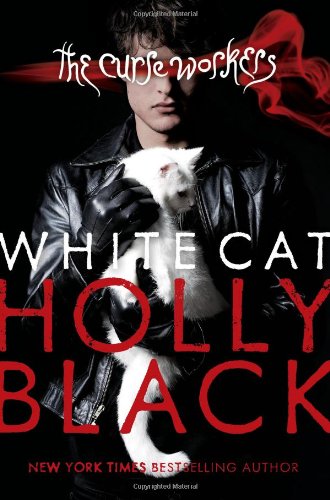
Since Holly Black wrote the Spiderwick Cronicles, I decided to listen to her presentation. Last week I’d “tweeted” and asked her which book I should read of hers as a new reader. (Some of my kids have read her Spiderwick books, and might have even seen the movie, but not me). She recommended that I read White Cat, first in her new Curse Makers series.
White Cat is an intricately plotted book based on a fascinating magic system. In this world, magic is considered bad and is run by the underground community, mainly mobsters. I don’t know if I’ll ever write a fantasy novel, but I did a ton of world-building for my WIP.
I found myself doing something that I rarely do in workshops these days—madly taking notes.
Holly Black described her world-building process as “6 crazy blue circles”. Each of her “circles” are the springboard for answering the important world-building questions.
According to Holly, coming up with a magic system that works, you must ask yourself these 6 questions:
1. Who has it?
2. What does it do?
3. How do you make it happen?
4. How is user affected?
5. How is world affected?
6. How are magic users grouped & perceived?
Holly then proceeded to answer these questions in reference to White Cat. (If you haven’t read it, this next part might not be as fulfilling. So go read it!)
1. Who has it? 1/1000 have it; it’s genetic
2. What does it do? It’s curse magic, and it can either bring luck, create dreams, change memories, affect emotions, bring physical death, cause transformation
3. How do you make it happen? Magic is transferred by bare hands touching someone’s skin (everyone wears gloves in this world)
4. How is user affected? Blow back (part of the magic blows back into the curse maker)
5. How is world affected? Magic is illegal and underground magic is controlled by the mobsters.
6. How are magic users grouped & perceived? Magic is not good and is perceived as a crime to use it.
Holly added some other great things to ask yourself during the world-building process, then concluded that it’s great to test your magic system on people who game or role play—since they are always trying to break the rules.

Monday, May 9, 2016

Show, Don't Tell: Micro vs Macro

A popular post from April 2011

by Annette Lyon

For years, I heard the "Show, Don't Tell" mantra and struggled to know exactly what it meant. I figured out pretty early that showing included using the five senses. I learned a few more techniques here and there (don't say she's sad; show her crying), but I still didn't fully grasp the concept until I heard A. E. Cannon speak at a writing workshop.

She talked about the revisions for her novel Charlotte's Rose and how her editor wanted her to show a particular character's personality better. Cannon insisted that she had shown it; we knew that Charlotte thought he was a mean, angry jerk (my words, but that's the gist), and we see Charlotte ruminating over his jerkiness as she's doing the laundry on the prairie.

Her editor suggested changing all that. Instead of telling us Charlotte's thoughts, have her interact with the man. We'd see her get hurt and angry, and then the reader, too, thinks he's a jerk because we just watched him be one.

That's how that section of the book was rewritten, by adding a showing scene. The man was shown to be a grouchy jerk, and the reader figured it out.

As I sat there listening to Cannon speak, a 1000-watt light bulb turned on in my head.

Prior to this, I'd thought of showing as something that belonged on the sentence or paragraph level. I could show by using a sound, a taste, a smell, a thought, an action. Sure, all of those things are important, and they are showing.

But.

They're only half of the equation. They're what I now call micro showing. And showing goes much deeper than that.

What I learned at the workshop was that showing is something you can (and should) do on a much larger scale, using entire scenes or chapters. What I now call macro showing.

Since then, I've gone on to write and edit many, many more books, and I've applied that principle constantly.

Macro showing involves dropping lots of bread crumbs throughout the story, trusting that the reader will follow those crumbs and figure out what they mean.

Don't simply say that this is how it is. Imply. Hint. Leave clues. Add shadows of meaning for plot, setting, and character. It all adds up to great showing.

Put your characters into situations that reveal their personalities. Don't tell us that Sheena eats when she's stressed. Have a scene where she gets totally stressed out (because of great conflict). Then write another scene where she's drowning her stress in cheese fries and a bacon burger.

Don't tell us that Patrick is an overbearing boss and that Cynthia has no backbone. Throw them into the same room when Cynthia's trying to get a few days off to be with her dying mother but Patrick insists she has to stay to meet a deadline. Let them reveal who they are and what they really want through dialog.

If Emily really likes Steve, don't tell us she gets tongue-tied whenever he's around. Put them in the same room and have Steve talk to her. Run a mental movie camera so we see Emily trying to respond to Steve, but unable to form a coherent sentence. We'll figure out what it means.

Macro showing is now one of the most powerful tools in my writing and editing arsenal. Chances are, if I write "show" on an edit, this is what I mean: pull out the macro-showing hammer and go to work. Your story will come alive.

Wednesday, May 4, 2016

6 Ways to Get the Most out of a Conference

A popular post from April 2011, as Storymakers is this weekend!

by Annette Lyon

In just over a week, I'll be presenting three workshops and moderating a panel at the LDStorymakers Writers Conference in Salt Lake City. As I prepare for my presentations, I can't help but think back to the first conferences I ever attended and how far I've come since then.

I remember sitting in the crowd and making a goal to one day be the one speaking to the attendees. It's still a bit mind-blowing that I am on the other side now, and I've even co-chaired a conference with Precision Editing's Heather Moore.

I've learned something new at every conference I've attended, since my very first one, which I believe was around 1996. While the types of things and the amount I learn vary, conferences are always a valuable experience.

Here are a few ways to make the most out of yours:

1) Look over the schedule in advance.
This is especially important if the conference offers more than one workshop at a time. You'll want to know where you're going and what you want to learn. It's miserable being on the spot, having to decide NOW between two or three great choices.

A couple of other reasons for checking the schedule in advance:
-Some workshops have limited seating, and you may need to RSVP for them in advance. If you miss the window, you're out of luck.

-Seeing the schedule tells you who is teaching what, which gives you a chance to familiarize yourself with the presenters and their work. (And that can help you decide which class to attend.)

2) Leave Your Comfort Zone at Home.
By nature of what we do, writers are solitary and often introverted, qualities that don't serve you well at a conference. One of the most valuable parts of any conference is networking with industry insiders, rubbing shoulders with other writers, and making friends.

Many critique groups form after the writers in them met at a conference, and deals go down thanks to contacts made there.

This is hard. I know it is. But force yourself to sit next to someone you don't know. Introduce yourself. Chat with other writers, both published and unpublished. It's not so hard once you break the ice, because after all, you do have one big thing in common: a love for writing.

3) Be Open to Feedback.
This goes hand-in-hand with leaving your comfort zone at home. If you are part of a critique workshop, a pitch session, or are getting feedback in any form, put on that thick skin, open your arms, and let it all in.

Remember that no one is there to attack you personally. Any feedback you get is given to genuinely help you grow as a writer and to improve your work.

4) Bring Your Supplies.
In whatever form they may be. Absolutely bring a notebook and something to write with. You may get a syllabus for note-taking as well, and a laptop is great too, but you can't guarantee you'll have enough writing space on a syllabus, and a battery can die. (This is a great time to use your AlphaSmart Neo if you have one.) A water bottle is also a good idea.

5) Follow Conference Etiquette.
Read any information on the conference web site and that the conference sends to you. Some basic things to keep in mind:

Don't pitch to an agent or editor at any time except in a pre-paid pitch session. (They tell horror stories of being pitched to in the restroom, in the elevator, at lunch . . . don't do it.)

Don't hog Q&A time, and pay attention so you don't ask questions that have already been answered.

If you made a meal selection when you registered, be sure to claim the meal you picked then (you can't change your mind now, or someone else won't get the meal they paid for).

Turn your cell phone to vibrate. Don't text during workshops.

Arrive on time. Be respectful during classes; don't talk to a friend in the middle of a lecture.

If you have suggestions for a future conference, feel free to leave feedback, often on a feedback form or web site. But be kind; realize that hundreds of man hours and months of work have gone into preparing for the event. Yes, people make mistakes, but there may be a reason for something you aren't aware of.

6) Most of all, HAVE FUN.
As far as craft goes, I learn much less at a conference today than I did back in 1996, simply because I've been working at it for so long, but I still find nuggets at every conference.

But even if I learned nothing new, I'd still go, for one big reason: conferences charge my creative batteries in ways nothing else can. There is no other place I can hang out where everyone there, literally hundreds of people, really get the writer part of me.

No one looks at me funny when I talk about characters having conversations in my head, or the latest cool fact I learned in my research, or how a plot twist just showed up. These are my people, and conferences are, in some ways, my Disneyland.

Wednesday, March 30, 2016

Options Open

A popular post from February 2011

by Annette Lyon

Back when I first imagined being a published writer, I assumed my books would be young adult fantasies. That's what I first wrote and submitted.

My first publications were something slightly different: a local newspaper piece celebrating the anniversary of a local event and an article in a scrapbooking newsletter.

I went on to do more freelance article work (to date, I've made over 100 sales), but fiction is and has always been my first love. So I kept writing young adult fantasy.

Until I didn't.

I went to writing conferences and started rubbing shoulders with people in the business. I got new ideas, saw new possibilities, new markets. And I ended up with brand new ideas for a totally different kind of book.

Years (and many manuscripts and rejections) later, I ended up publishing two contemporary romances, four historicals, and a women's novel.

To say that wasn't what I expected would be an understatement. And then another detour: I had the chance to write a chocolate cookbook.

Not something I ever in a million years would have expected to do, yet there was that door opening. I wasn't about to say no.

Since my first publications well over a decade ago, I've done editing work for individuals as well as companies. I've been paid for script writing, proofing, and press kits.

I wrote a grammar guide and self-published it (again, something I would have seen as way off in left field when I first started).

The rights on my first two books reverted to me. The first is now on Kindle, and the second will be within days. I have plans to get more books onto the Kindle without a publisher. And I still plan to publish traditionally as well.

At times, I feel like my head is spinning with all the different directions my career has taken me. I literally need about half a dozen sheets in an Excel workbook to keep it all straight.

And I love it.

I love how many opportunities come my way. I've learned that while the work clothes they arrive in may not match my original expectation, when they knock, I should go for 'em.

Some benefits:

So much in the process of writing a variety of fields has taught me lessons that improve my work in every area. (Even technical script writing can help my fiction. Shocking, but true.)

I have multiple streams of income. This is particularly nice between the two-times-a-year royalty checks.

I'm motivated to improve and work hard, because much of my work comes through referrals. If I do a good job for one client, there's a good chance they'll pass along my name when a friend needs help.

My skills as a public speaker have improved. The more I write and work, the more I've been asked to speak. Writing is a solitary endeavor. Public speaking used to terrify me. Now I know I can get in front of a crowd and have something worthwhile to offer them.

More doors open all the time. I'm amazed at how many new things keep coming up the pike for me. I'm to the point where I have to sit back and decide what is most worth my time, because there really isn't time for it all. (What a great problem to have!)

So no, my writing career doesn't resemble my original idea of it, not hardly. The one exception is that I can go to a bookstore and see my books on the shelf with my name on them. (Which, I will say, is totally awesome.)

Beyond that, I do a lot of work that most of my novel readers will likely never see. I don't mind; I love that I have so many opportunities to make money and publish and WRITE. I enjoy every bit of it.

So when a writing opportunity opens up, don't slam the door shut because it's not part of the image you've created in your head. Look a little closer; by letting it in, you may adding a future opportunity that could lead to bigger and better things.

Sunday, January 11, 2015

2015 Writers Conference in Utah

Since most of our PEG editors are in Utah and frequently teach at the local conferences, here's a comprehensive list. If you know of another conference or an update, let us know!

2015 LTUE Fantasy & Sci Fi Conference, February 12-14 2015, Provo Marriott Hotel & Conference Center. Register here.

2015 LDS Storymakers Conference, May 15-16, 2015. Utah Valley Conference Center, Provo, Utah (next to downtown Provo Marriott). Registration here.

2015 Indie Author Hub Writers Conference, June 19-20, 2015. Information will be posted here.

2015 Writers at Work Conference, TBA, 2015. Alta, Utah. Information will be posted here.

2015 Writing & Illustrating for Young Readers Conference, June TBA, 2015. Waterford School, Sandy, Utah. Information coming here.

2015 Teen Writers Conference, June 13, 2015. Weber State University. Info here.

2015 League of Utah Writers Conference, September TBA, 2015. Visit website here.

2015 Utah Romance Writers of America conference. Usually in October. Information will be posted here.

2015 Kanab Writers Conference. Usually in October. Kanab, Utah. Information will be posted here.

2015 IndieReCon. Coming Fall 2015. Information here.

Friday, June 6, 2014

Indie Author Hub Conference TOMORROW

Indie Author Hub


You can still register. Walk-ins also welcome as long a there's room.

June 7, 2014, Courtyard Marriott Hotel, 1600 N Freedom Blvd, Provo, Utah.

7:30 am Check-in & complimentary bagels & juice
8:30 am Welcome
8:40 am Keynote NY Times Bestselling indie author Amy Harmon
etc!


The Indie Author Hub is made up of many successful indie authors and hybrid authors.

Guest speakers include NY Times Bestselling indie author Amy Harmon, USA Today bestselling author Rachael Anderson, bestselling hybrid author Rachel Ann Nunes, and PEG's Heather B. Moore, Lu Ann Staheli & Julie Wright.

Workshops include classes on ebook creation, marketing, business, and the writing craft.

Registration information here.

Sunday, April 13, 2014

New Indie Author conference

Indie Author Hub


The Indie Author Hub writers group is putting on their first writers conference. June 7, 2014, Courtyard Marriott Hotel, 1600 N Freedom Blvd, Provo, Utah.

The Indie Author Hub is made up of many successful indie authors and hybrid authors.

Guest speakers include NY Times Bestselling indie author Amy Harmon, USA Today bestselling author Rachael Anderson, bestselling hybrid author Rachel Ann Nunes, and PEG's Heather B. Moore.

Workshops include classes on ebook creation, marketing, business, and the writing craft.

Registration information here.

Monday, September 16, 2013

Next PEG Workshop: Indie Publishing (November 16, 2013)

Have you thought about Indie Publishing but don't know if your manuscript is ready? Or maybe you are a traditionally published author with a couple of niche projects sitting around, yet don't want the label of "self-published"? PEG is hosting the Indie Publishing Workshop to teach you how to build your professional indie team for editing, design, cover, ebook distribution and marketing, so that you are presenting a professional and competitive product.

We will be posting any updated on our PEG Workshop blog.

Workshop topics:
*The Hybrid Author: Pro's and Con's of Traditional Publishing vs Indie Publishing
*Stages of editing needed for a professional product
*Building Your Team & Managing the Money
*Author branding and platform
*Marketing, Pricing & Categorizing ebooks (or How to Hit Top 100 categories)


November 16, 2013
American Fork Library
64 South 100 East, American Fork, UT
Doors open: 10:00 a.m.
Workshop: 10:30 a.m. -- 4:30 p.m.

Includes one hour lunch break, lunch on your own

Registration deadline: November 13th

**Limited Space**

Payments to: www.paypal.com
Pay $45.00 to PayPal account: editor@precisioneditinggroup.com
**include "PEG Workshop" in the notes
**include your email address in the notes if different from your paypal address
(you don't need a PayPal account to do this)

Instructors include best-selling indie published authors:

Rachel Ann Nunes Rachel has been a bestselling author in the traditional market for many years, and she's also independently re-released older titles such as Bridge to Forever and This Time Forever, as well as helping other authors do the same.


Heather Horrocks Heather is the bestselling indie author of romantic comedies and cozy mysteries. With over 10 bestselling publications, Heather's latest release is Kissing Santa.


Rachael Anderson Rachael has been a bestseller on Amazon for over a year with her popular contemporary romances, including The Reluctant Bachelorette, Working It Out, and the All I Want anthology.

Heather B. Moore Heather indie publishes the popular Timeless Romance Anthology series, the Aliso Creek Novella series, and the historical romance, Heart of the Ocean.


Lu Ann Staheli Lu Ann has indie published award-winning Middle Grade, YA, and upcoming non-fiction. Recent titles include Just Like Elizabeth Taylor, Tides Across the Sea, and A Note Worth Taking.

Thursday, September 12, 2013

Writing Workshop: League of Utah Writers

We'll be teaching the all day workshop at the League of Utah Writers on Friday, September 13, at the Salt Lake City Airport Hilton Hotel. Workshop starts at 11:00 a.m. Here's the registration link.

From Plotting to Final Draft: Getting Your Manuscript Ready to Compete
Heather Moore, owner of Precision Editing Group, and four senior editors will teach this in-depth, hands-on workshop: From Plotting to Final Draft: Getting Your Manuscript Ready to Compete. Publishers and agents receive thousands of submissions each year. More so than ever, your book concept needs to stand above the rest, and your writing needs to be tight and carefully edited. Come ready to write, to learn, and to discover how to take your manuscript to next level. 

EDITORS: Heather Moore, Annette Lyon, Lu Ann Staheli, Michele Holmes, Josi Kilpack

Friday, November 2, 2012

Get Your Prezi On!


By Josi S. Kilpack
           Last June I went to a parent orientation with my daughter who was about to start college (Go Utes!) and in one of my classes, the instructor (i.e. Upperclassman doing an internship) had a PowerPoint presentation. Or, at least, I thought it was a PowerPoint. It looked like a title page projected on the screen, with some little design-type tiles to the side. He started the class and clicked his pointer, but instead of the page sliding or folding or whatever, the screen zoomed into one of the little tiles I thought were just decorative. It was another PowerPoint slide with bullet lists and whatever, but he’d ZOOMED to it. He clicked his clicker again and the page zoomed out and then zoomed back in on a video interview. It was as though I were watching a TV show. He had music, videos, graphics, and lists within lists which made up the “slides” of his presentation. It was very cool. I wanted to ask him what the heck it was after the class, but he was engaged with someone else and I had to go, but I wondered if it was a special U of U thing, or was it a new version of PowerPoint. I didn’t know, but it was cool.
            A few months later, Rob Wells was telling me about this Prezi he was. I thought he was being cute—like when you call a helicopter a chopper—but as he kept talking I realized that I was missing something. He eventually showed me his presentation and I was like, “THAT’S WHAT THE KID HAD AT THE U.” It was awesome.
Rob told me it was easy to learn, but I was in no place to learn something new and so though I was excited to know about it, I wasn’t ready to dive in. My PowerPoint presentations were fine.
            Then I attended a conference where Marion Jensen had a Prezi. It was so crisp and almost felt interactive, even though it was a presentation just like any PowerPoint presentation was. I decided I would learn how to do it one day, then a few weeks later realized I had to build a presentation for a conference I had last week. I was in between my deadline and my revisions so I went to Prezi.com and within a couple of hours, I had my first Prezi done, complete with lots of images I could use off the computer without having to download them. The next day I adapted an existing power point into a Prezi. I got compliments at the conference for both of them.
            So, basic stuff to know about a Prezi. It’s a free online thing—you build your Prezi through their site and then you download it if you want it on your computer, though you can access it online as well. You can pay to keep your Prezis private, or you can have a free account which remains public. It kind of bugs me that anyone can see my Prezis, but apparently it doesn’t bug me enough to pay $60 a year for a private account. It makes me feel better to know that I’m the only person who can edit my Prezis (unless I give someone else permission) and I was sure to put my name all over both of them so that if anyone does use them, I will still get credit. The biggest risk, I guess, is that someone can steal my ‘content’ so I remain mindful of that
The only drawback I found is that when I give a PowerPoint presentation I usually do it from ‘presenter view’ which means I can see a slide ahead and read any notes that I’ve made—none of that shows up for those attending my presentation, but it gives me a little more detail. I don’t think Prezi has that, which meant that as I gave my presentation there were times when I wasn’t sure what frame came next. I need to poke around the site and see if there is a solution to this somehow, like being able to print out the pages in advance. But even without that, I enjoyed the format very much.
Both Prezis I’ve created are very, very basic, but I like how they turned out and I feel all cool and stuff to have learned to do something cutting edgeyish.
            You can create an account and get started at www.Prezi.com.

Wednesday, April 4, 2012

Upcoming Writers Conferences

WIFYR:

For all children's authors seeking to be published and/or improve their work, The Writing and Illustrating for Young Readers Conference is not to be missed. Held at the Waterford School in Sandy, Utah, June 18-22, the five-day conference offers nine morning workshops with experienced author, editor, or illustrator manuscript critiques. The faculty includes Cynthia and Greg Leitich Smith, Matthew Kirby, Tim Wynne-Jones, A. E. Cannon, Carol Lynch Williams, Ann Dee Ellis, Covenant Communications editor Kirk Shaw, Illustrator Julie Olsen, and many others. The conference also offers an afternoon-only option. This year WIFYR is sponsoring a Writing Competition and Fellowship Award with a $1000 cash prize. Contest deadline is April 20th. For details, go to WIFYR.com


The Teen Writers Conference
Registration is now open! Keynote speaker is Elana Johnson. Other speakers include many award-winning authors. Deadline to register is June 15, 2012.
When: Saturday, June 23, 2012
Where: Weber State University
Who: Teens, ages 13-19
Writing Contest!

Register at THE Teen Writers Conference website.

Wednesday, April 21, 2010

Conference Tips

by Annette Lyon

The entire Precision Editor Group staff will be at a writers conference this weekend as presenters. We love participating, both as speakers as well as attendees.

Conferences are a great place to do lots of things:

Learn the craft.
The first conference I attended was nearly 14 years ago. In that time, I've had the chance to listen to some amazing (and, okay, some less-than-stellar) speakers. I know a lot about writing, but I can always learn more. I attended a friend's class a few years ago simply to support her. While most of the workshop was a review for me, I still learned . . . and came away with some fantastic ideas for developing my characters further. There's always a nugget to be learned, regardless of how "good" you are.

Learn the industry.
I recall attending a conference where the visiting agent was getting questions that I thought were elementary. It wasn't until that moment that I realized that six years prior, I hadn't known the answers to those very questions. I'd come a long way!

Meet other Writers.
Some of the people who are now my best friends are those I met through conferences and other writing networks. Writing is a rather solitary profession; it's just you and your keyboard. I'm still amazed at the positive impact that a strong support network of friends who GET what being a writer means (and have been there, done that) can be.

Meet Industry Insiders.
As unfair as it sounds, the reality is that very often it's not necessarily the best manuscript that gets published. Often it's who knows who and what manuscript lands on the right person's desk on the right day. The more writers, editors, agents, and other professionals you know, the greater the chance of reaching the right person when your time comes.

As we've mentioned before, these kinds of meetings can sometimes happen in pitch sessions and manuscript review appointments. Prepare for them, but be professional. Don't stalk the agent and start with your elevator pitch WHILE IN THE ELEVATOR.

Recharge Your Batteries
Even if you think that you won't learn much from a particular conference, chances are that if you go, you'll leave pumped to write and improve. I know that every spring after this conference, I come home jazzed to get back to the keyboard and do what I love most: WRITE.


I can hardly wait for this weekend to arrive, when I get to see the friends who understand me best, be immersed in the writing world, and come home totally on fire.

Monday, January 25, 2010

100 Followers, Conferences & Other Updates

Today we officially have 100 followers! Welcome to Writing on the Wall if you are new. As a quick introduction, we are a group of freelance editors who work under the umbrella of Precision Editing Group, LLC. What sets us apart from other editors? We're all published authors, so we know the writing journey inside and out. We also believe in mentoring, thus the beginning of this blog.

We don't have a Monday Mania submission today, so here are some updates.

We've started posting a few Writers Conferences on the sidebar. Obviously there are hundreds of conferences each year and we can't post them all. An excellent source is Writer's Digest. Also you can google writing chapters in your area.

Each year there is a free fantasy/sci fi writers conference in Provo, Utah, called LTUE (Life, the Universe and Everything). PEG editor Julie Wright, will be teaching a couple of workshops, as well as Lisa Mangum, editor for Shadow Mountain (which has put out NY Times Bestselling Authors), and Brandon Sanderson (NY Times Bestseller). There is an impressive line up this year. Conference dates: Feb 11-13, 2010. Check it out here.

Congrats to Josi Kilpack (PEG Editor), her newest book Devil's Food Cake comes out any day. We're happy to announce book releases for our blog followers. Just let us know!


Coming this Friday: An interview with award-winning writer, Kelli Stanley, author of the upcoming City of Dragons. She'll share her writing and publication journey of how she went from publishing her first book with a small press to landing a publishing contract with a major publisher.

Tuesday, September 22, 2009

Spilling the Beans

by Heather Moore


This past weekend I attended the League of Utah Writers Conference in Midway, Utah (think Heber or Park City—it’s beautiful up there).

It was one of those full circle moments. In 2002, I attended my first writers conference ever—the LUW conference. There I heard from writers that I had admired for years. I entered the contest with a manuscript and earned a 3rd place award. I used the validation to keep me motivated as I waded through plenty of rejections in the months to come.

This year—2009—I attended the conference as a presenter. Even though I felt that I had a lot of insights to share—especially my own bumpy road to publication—I was there to learn. On the side, I was also there as a fan.

I was excited to meet Sandra Dallas. I also took a workshop from Richard Paul Evans, a local author who has been a NY Times Bestseller most of his career. In Evans’ “former” life he was an advertising executive—a very successful one. Transitioning from an ad ex to a successful author is something to note, and believe me, I was writing down every word he said.


So I decided to spill the beans. Some of it you’ve probably heard before, but when Richard Paul Evans says “When I get up in the morning, I go to work against John Grisham,” you suddenly sit up and take more notice.

Evans said to ask yourselves these questions when writing your book:
-Is there an audience?
-Is that audience big enough to earn success?
-Who will purchase the book (i.e. parents purchase books for their children; women purchase books for their husbands, etc.)
-Can you create perpetual motion with your sales? In other words, will you get more energy (sales) out of the product than what you put into it (marketing)?

He also advised:
Find your unique selling proposition and market to it! He gave the example of a book that was published called Compact Classics. It was a glorified and condensed version of Cliff Notes in which you could read a summary of a classic in just a couple of minutes. Sales lagged. Then it was discovered that people were reading this book in the bathroom . . . and the book was renamed: The Great American Bathroom Book. Sales skyrocketed.

Listen to your reviewers. What are they saying about your book? What is the main theme they restate? This is your unique selling proposition.

And finally:
Take Prisoners! You need to capture your audience by creating a mailing list. Evans shared story after story of authors who had their first books sell like crazy. But they didn’t capture their audience (collect addresses or emails), and they weren’t able to market their next books to the audience that loved the first one. When Rick goes to a signing or event, he hands out sign-up cards where the reader can sign up for his email letter, or be on his postal list. Readers can also go to his website to sign up for his newsletter. He also recommended that as a writer, we should sign up for other authors’ newsletters so that we can learn how they are marketing their books.

Friday, July 31, 2009

Fall 2009 Writers Conferences

Writers conferences are a great way to network with writers, agents, editors, and to learn the most up-to-date information about the publishing industry. Not to mention fine-tuning your craft.

Various PEG editors will be teaching workshops at the following Writers' Conferences this fall:

The League of Utah Writers: 2009 Conference
September 18-19, 2009: The Homestead Resort in Heber, Utah
(Lu Ann Staheli and Heather Moore)

The Book Academy: A conference for Writers and Readers
September 24, 2009: Utah Valley University, Orem, Utah
(Annette Lyon, Josi Kilpack, and Heather Moore)