Wednesday, April 27, 2011

6 Ways to Get the Most out of a Conference

by Annette Lyon

In just over a week, I'll be presenting three workshops and moderating a panel at the LDStorymakers Writers Conference in Salt Lake City. As I prepare for my presentations, I can't help but think back to the first conferences I ever attended and how far I've come since then.

I remember sitting in the crowd and making a goal to one day be the one speaking to the attendees. It's still a bit mind-blowing that I am on the other side now, and I've even co-chaired a conference with Precision Editing's Heather Moore.

I've learned something new at every conference I've attended, since my very first one, which I believe was around 1996. While the types of things and the amount I learn vary, conferences are always a valuable experience.

Here are a few ways to make the most out of yours:

1) Look over the schedule in advance.
This is especially important if the conference offers more than one workshop at a time. You'll want to know where you're going and what you want to learn. It's miserable being on the spot, having to decide NOW between two or three great choices.

A couple of other reasons for checking the schedule in advance:
-Some workshops have limited seating, and you may need to RSVP for them in advance. If you miss the window, you're out of luck.

-Seeing the schedule tells you who is teaching what, which gives you a chance to familiarize yourself with the presenters and their work. (And that can help you decide which class to attend.)

2) Leave Your Comfort Zone at Home.
By nature of what we do, writers are solitary and often introverted, qualities that don't serve you well at a conference. One of the most valuable parts of any conference is networking with industry insiders, rubbing shoulders with other writers, and making friends.

Many critique groups form after the writers in them met at a conference, and deals go down thanks to contacts made there.

This is hard. I know it is. But force yourself to sit next to someone you don't know. Introduce yourself. Chat with other writers, both published and unpublished. It's not so hard once you break the ice, because after all, you do have one big thing in common: a love for writing.

3) Be Open to Feedback.
This goes hand-in-hand with leaving your comfort zone at home. If you are part of a critique workshop, a pitch session, or are getting feedback in any form, put on that thick skin, open your arms, and let it all in.

Remember that no one is there to attack you personally. Any feedback you get is given to genuinely help you grow as a writer and to improve your work.

4) Bring Your Supplies.
In whatever form they may be. Absolutely bring a notebook and something to write with. You may get a syllabus for note-taking as well, and a laptop is great too, but you can't guarantee you'll have enough writing space on a syllabus, and a battery can die. (This is a great time to use your AlphaSmart Neo if you have one.) A water bottle is also a good idea.

5) Follow Conference Etiquette.
Read any information on the conference web site and that the conference sends to you. Some basic things to keep in mind:

Don't pitch to an agent or editor at any time except in a pre-paid pitch session. (They tell horror stories of being pitched to in the restroom, in the elevator, at lunch . . . don't do it.)

Don't hog Q&A time, and pay attention so you don't ask questions that have already been answered.

If you made a meal selection when you registered, be sure to claim the meal you picked then (you can't change your mind now, or someone else won't get the meal they paid for).

Turn your cell phone to vibrate. Don't text during workshops.

Arrive on time. Be respectful during classes; don't talk to a friend in the middle of a lecture.

If you have suggestions for a future conference, feel free to leave feedback, often on a feedback form or web site. But be kind; realize that hundreds of man hours and months of work have gone into preparing for the event. Yes, people make mistakes, but there may be a reason for something you aren't aware of.

6) Most of all, HAVE FUN.
As far as craft goes, I learn much less at a conference today than I did back in 1996, simply because I've been working at it for so long, but I still find nuggets at every conference.

But even if I learned nothing new, I'd still go, for one big reason: conferences charge my creative batteries in ways nothing else can. There is no other place I can hang out where everyone there, literally hundreds of people, really get the writer part of me.

No one looks at me funny when I talk about characters having conversations in my head, or the latest cool fact I learned in my research, or how a plot twist just showed up. These are my people, and conferences are, in some ways, my Disneyland.

Monday, April 18, 2011

Scissors


Today I cut 40 pages out of my work in progress. Even the Dr. Pepper and chocolate bar didn’t make this surgery any less painful, but it had to happen. If the leg is infecting the rest of the body, cut the leg off and save the body.


These forty pages were infecting the manuscript, so I cut them out—to save the manuscript.


It hurt.


A lot.


I did save them over in a cuts document (a little trick I learned from Josi Kilpack) so that if I need to mine something out of those forty pages, I can. But now I have fresh pages to work with. I can recreate the cut out part into something that functions with the rest of the manuscript. If I’d simply tried to edit those pages and force them to fit (which I did try to do for a few weeks until I finally realized I was being stubborn) I would have put the entire manuscript in jeopardy.


I’ve done a lot of editing over the years with Precision Editing Group, and there have been times where I’ve had to advise people to cut out huge hunks of their manuscripts. I don’t know if they always take my advice, but it’s something I don’t hand out lightly. Telling someone to carve away ten or more pages is almost as cruel as having to do it on my own manuscripts. I feel their pain and feel guilt for inflicting it on them. I only advise it when I genuinely believe there’s no way to salvage those pages.


It took a long time for me to understand what other writers meant when they said “kill your darlings.” I’d cut out a few words and figure I’d done the job asked of me. But it’s so much more than that. Killing your darlings isn’t about changing a passive voice to active. It isn’t about slicing off the errant adverb. It’s sometimes cutting the stuff you love.


There was some seriously good writing in those forty pages I amputated this morning. There were things that made me laugh. There was some new sci-fi technology that thrilled me. There was a heart pounding action scene that made me wonder if my characters would ever survive it. There were new creatures that were so awesome, I can’t believe they came out of my head. I cut all of them. They were darling to me, but I cut them all. The scenes were great, but they didn’t push towards the overall arc of the story. They didn’t *work*


That’s what they mean by killing your darlings. It hurts, but if something isn’t working after weeks or longer of trying to force it, the problem might not be the glue you’re using to force it all to stick . . . the problem might be your unwillingness to use the scissors.


Now, I feel a certain relief with those pages moved away from the body of the manuscript. It’s another chance. And another chance is refreshing—filled with hope and possibility.

Friday, April 15, 2011

Interview with middle-grade author Frank Cole


I’d like to welcome Frank Cole to our blog. If there’s one word I could use to describe Frank it’s: enthusiastic. He has a contagious enthusiasm about him that draws the kids in.

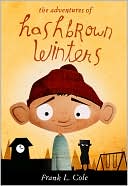
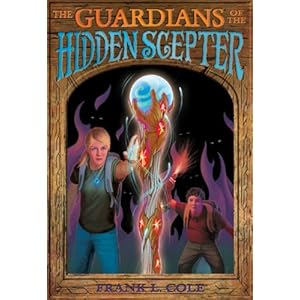
Frank is the author of the middle-grade series, Hashbrown Winters. His newest book is the middle grade book, The Guardians of the Hidden Scepter. Frank has had 4 books come out in two years—I think he’s found a niche.


Something I’ve learned from my writer friends who write in the children’s genre is that children’s authors have to put themselves right into the action—and go to where their readers are: Elementary schools. So if you are reluctant to spend time speaking to a group of school kids (over and over), it will be tough to compete with the other children’s authors out there who are working hard to connect to their audience.

I hope you enjoy the interview!

Heather: Like I mentioned, being a successfully published children's book author requires school visits. Tell us how you manage to work these in and if you think they are worth the effort. Also let us know if you have any tips for new children's book authors out there who are planning on doing school visits.

Frank: I honestly feel it is one of the best ways to promote your work to kids. Especially for the younger middle grade audience. I think kids need to connect with the author and by providing a fun, educational presentation at their school, you create that connection. It can become difficult trying to juggle writing, marketing, and delivering school presentations, but I think it is well worth the investment of time. My tips would be to have as much fun as you possibly can. When the presentation becomes a chore for you, the kids will pick up on that and lose interest. Be animated and be funny if you can. And keep them involved throughout the presentation, whether with Q&A or with activities.

Heather: You’ve had 4 books come out since 2009. Tell us about your publishing experience. Did you get your first book written published? And how long did it take to find a publisher?

Frank: I went through your typical grueling experience to become published. Tons of rejection letters. Tons of rewrites. Always questioning whether or not I truly wanted to continue. The first book I wrote took the brunt of most of my rejections and no it has yet to be published. (Probably never will.) From the moment I realized I wanted to be a published author to the day my first book appeared on bookshelves took about 8 years. Still, I feel it was worth the wait!

Heather: I love hearing the stories of how authors have persevered through rejections and revisions. Well done! I think many of us have those first manuscripts that are buried on an archaic disk drive somewhere. It’s important for new writers to know that their first, most beloved, book may never be published, but we all have to start that next book. What are some things you wished you would have known when you had your first book published?

Frank: How much work I would have to do to promote it. It really doesn't matter if you're published by one of the big publishing companies or an independent publisher. The real work begins when you sign the contract.

Heather: Agreed. Yes, if you are on the A list with a publisher, you’ll get more advertising, but the author still has an incredible amount of self-promotion to do. Speaking of promoting one’s self, social media has become a must in promoting books. In fact, publishers are asking their authors to create an on-line presence. What type of social media do you use in marketing your books? And what do you find to be the most effective or useful?

Frank: I blog (franklewiscole.blogspot.com), I use Facebook quite a bit, and I've recently started building an e-mail list (should've started earlier.) So far, Facebook has been my most effective tool in spreading the word.

Heather: Your newest book, The Guardians of the Hidden Scepter, is separate from your Hashbrown Winters series. Give us the elevator pitch.

Frank: The Guardians of the Hidden Scepter is my take on action adventure with an Indiana Jones type feel, but with kids as the stars. If you like action and suspense, but also enjoy laughing along the way, this book should appeal to you.

Heather: Sounds great. What has been your most rewarding experience since becoming an author?

Frank: I love seeing a book I wrote on a bookstore shelf, but I think the most rewarding experience has been whenever a parent or a teacher at an elementary school approaches me and tells me my books have helped ignite a love of reading within their child or student. That's what it's all about!

Heather: I definitely agree with that. It’s very humbling, yet very motivating as well and makes the grueling hours of editing more worthwhile. What have you learned about the publishing industry that you didn't know before you got your contract?

Frank: I think I've learned there are literally thousands of people trying to get something published and most of them are quality writers with really great ideas. It's intimidating. I've also learned for most people in the industry (myself included) writing an awesome story is only the beginning. Marketing your project, putting it in people's hands, presenting yourself in as many places possible is the very next step.

Heather: Thank you, Frank. In parting, what advice do you have for aspiring authors?

Frank: Don't give up and keep writing. Rejection is part of the business. If you give up after the first or fiftieth rejection, you'll never realize what you could have accomplished. Don't stay married to your first novel. The best thing you can do is to keep writing and learning. You abilities will develop after each book you finish. It's likely your first novel won't be the one that receives the contract. So, start cracking out your second and third.

Frank Cole's Blog
Frank Cole's Hashbrown Winters series on Amazon
The Guardians of the Hidden Scepter on Amazon

Wednesday, April 13, 2011

Show, Don't Tell: Micro vs Macro

by Annette Lyon

Next month, I'll be teaching a couple of workshops at the LDStorymakers Writers Conference. (If you plan to attend, be sure to register soon; Friday, April 15 is the last day.)

One of the workshops, which will be repeated, is Show, Don't Tell. I thought I'd give a sneak peek at some of what I'll be covering in the class.

For years, I heard the "Show, Don't Tell" mantra and struggled to know exactly what it meant. I figured out pretty early that showing included using the five senses. I learned a few more techniques here and there (don't say she's sad; show her crying), but I still didn't fully grasp the concept until I heard A. E. Cannon speak at a writing workshop.

She talked about the revisions for her novel Charlotte's Rose and how her editor wanted her to show a particular character's personality better. Cannon insisted that she had shown it; we knew that Charlotte thought he was a mean, angry jerk (my words, but that's the gist), and we see Charlotte ruminating over his jerkiness as she's doing the laundry on the prairie.

Her editor suggested changing all that. Instead of telling us Charlotte's thoughts, have her interact with the man. We'd see her get hurt and angry, and then the reader, too, thinks he's a jerk because we just watched him be one.

That's how that section of the book was rewritten, by adding a showing scene. The man was shown to be a grouchy jerk, and the reader figured it out.

As I sat there listening to Cannon speak, a 1000-watt light bulb turned on in my head.

Prior to this, I'd thought of showing as something that belonged on the sentence or paragraph level. I could show by using a sound, a taste, a smell, a thought, an action. Sure, all of those things are important, and they are showing.

But.

They're only half of the equation. They're what I now call micro showing. And showing goes much deeper than that.

What I learned at the workshop was that showing is something you can (and should) do on a much larger scale, using entire scenes or chapters. What I now call macro showing.

Since then, I've gone on to write and edit many, many more books, and I've applied that principle constantly.

Macro showing involves dropping lots of bread crumbs throughout the story, trusting that the reader will follow those crumbs and figure out what they mean.

Don't simply say that this is how it is. Imply. Hint. Leave clues. Add shadows of meaning for plot, setting, and character. It all adds up to great showing.

Put your characters into situations that reveal their personalities. Don't tell us that Sheena eats when she's stressed. Have a scene where she gets totally stressed out (because of great conflict). Then write another scene where she's drowning her stress in cheese fries and a bacon burger.

Don't tell us that Patrick is an overbearing boss and that Cynthia has no backbone. Throw them into the same room when Cynthia's trying to get a few days off to be with her dying mother but Patrick insists she has to stay to meet a deadline. Let them reveal who they are and what they really want through dialog.

If Emily really likes Steve, don't tell us she gets tongue-tied whenever he's around. Put them in the same room and have Steve talk to her. Run a mental movie camera so we see Emily trying to respond to Steve, but unable to form a coherent sentence. We'll figure out what it means.

Macro showing is now one of the most powerful tools in my writing and editing arsenal. Chances are, if I write "show" on an edit, this is what I mean: pull out the macro-showing hammer and go to work. Your story will come alive.

Friday, April 1, 2011

Announcements

Our senior editor, Lu Ann Staheli will be teaching a writing workshop April 9, 2011, at Confetti Books in Spanish Fork, Utah. Lu Ann is a Best of State Author and Best of State Educator. Registration info is on her blog: Lu Ann's Library.

Also, if any of our blog followers have a book release, we are happy to announce it here.

Recently, Josi S. Kilpack's culinary mystery, Blackberry Crumble was released. Congrats!


Also, congrats to Julie Wright. Her first middle grade Sci Fi just came out!