A popular post from September 2009
By Heather Moore
I’ve been to many writers conference over the past eight years, and listened to maybe close to 100 presenters. I’m at the point where I’ve heard pretty much everything, so I rarely take notes anymore. Mostly I’m interested in publishing stories—as in how did this bestselling author get his/her start?
At the Book Academy conference held at Utah Valley University this past week, Brandon Sanderson was the keynote speaker. If you are a fantasy writer, for children, YA, or adult, his books are a must-read. He writes the Alcatraz series for middle-grade readers (they are hilarious for adults as well. Also, for you omniscient pov writers, this series is a classic example). He also writes epic fantasy. Elantris is his first published, and the Mistborn trilogy has propelled him to pretty much stardom. I'm dying to read Warbreaker, his newest release, but I'm trying to get my WIP progress drafted first.
Brandon talked about how he wrote novel after novel (I think it was 12-13) before he finally got his #6 book a publishing contract. When he heard from the editor who wanted to buy his book, he contacted an agent who he’d gotten to know over the years through various writers conferences. The agent signed him.
Brandon gave some advice on things he wished he would have known before he tried to follow market trends (which wasn’t successful for him). I won’t reiterate it here since I don’t want to plagiarize, although I did ask him if it was okay to blog about it. And I think he said yes. Or maybe I just told him I was going to, and he looked at me funny. I’m not sure (since when I'm around famous people I'm lucky to remember my name), so to be on the safe side, I’ll just tell you about one of the things he emphasized.
“Write what you like to READ.”
This sounds so simple, but when you really think about it, it makes a whole lot of sense. This can solve some of our writer’s angst when we are trying to think of a new genre to break into. Say you are published in historical fiction (like me!) and you see all of your friends getting huge advances in children’s lit. Hmmm. Should I switch genres? Catch the tide? Do I love children’s lit or am I just trying to copycat?
So I pause and ask myself: “What do I READ?” That’s the answer. If I don’t like to read what I’m writing, then guess what? The passion will fizzle out all too soon.
So, like Brandon, who decided to not follow the tide and write what he was passionate about (Epic Fantasy), I think I’ll do the same—not the same genre, but you know what I mean.
One last quote from Mr. Sanderson, which I thought about putting on my whiteboard in my office, but then didn’t want to be reminded of a big revision in my near future:
“To begin is human.
To finish is divine.
To revise is hell.”
Showing posts with label fantasy. Show all posts
Showing posts with label fantasy. Show all posts
Monday, February 20, 2017

Wednesday, June 22, 2016
Defining Markets
A popular post from August 2011
by Annette Lyon
by Annette Lyon
Knowing who your readers are is crucial. Your readers define your market and genre. Market and genre define where your book will be shelved (or indexed online) and therefore how potential readers will find you.
It also defines how you write your book.
Below are some basic genres and markets. The descriptions are very much generalized, but they'll at least give you an idea of how the publishing industry breaks things up.
Early Chapter Books
These are books young readers cut their teeth on. They're longer than picture books (but will still have some pictures), have larger fonts, and stick to pretty simple story lines. Books in this market include everything from the Arthur chapter books to the Frog and Toad series, Junie B. Jones, The Magic Tree House books, and so forth.
Middle Grade
Much longer books, few if any illustrations. Focused on emerging readers who can handle more complex stories and characters. Themes aren't too intense, and the protagonists are usually early teens. Middle grade has quite a range, from Diary of a Wimpy Kid and Dear Dumb Diary to more complex books like the Fablehaven series, Percy Jackson, and the Deltora Quest series, along with the early Harry Potter books. (As Harry ages, so does his market. The later books are clearly Young Adult.)
Young Adult
Older teens are the main characters, and with that, we get more difficult and complex stories and themes. That can mean more violence and other content (language, drugs, innuendo, etc.), but it doesn't have to. Often YA means longer books. Examples include The Hunger Games, My Fair Godmother, and The Maze Runner.
Speculative
This is a huge umbrella that covers several genres. In the most basic terms, "Speculative" means science fiction and fantasy. It can also include paranormal, horror, and other "otherworldly" stories. Within speculative you'll find sub-genres like dystopian, post-apocalyptic, high fantasy, low fantasy, and more. If you're writing here, you'll need to do research so you know what's out there and where you fit. Examples: Ender's Game, I Am Not a Serial Killer, and Mistborn.
Romance
The cardinal rule: the couple must end up together in a committed relationship. That doesn't mean we need to see an engagement or a wedding, but they need to be together, essentially "happily ever after."
You can certainly write stories where the couple doesn't get together. Such books sell well, but they're in a different genre (women's fiction or literary fiction). They cannot wear the label of "Romance."
Romance isn't all "bodice-rippers." It's a huge market (the best-selling genre by a mile). Included are category romances and stand-alone titles (find out which you write) and levels of "heat" from "sweet" (where the hero and heroine do no more than kiss) up to the really spicy (which can border on erotica) and everything in between. Examples of Romance writers: Danielle Steele, Georgette Heyer.
Mystery
In the same vein, a mystery must have the crime (usually a murder) solved by the end, or it's simply not a mystery. This genre has a big range of sub-genres, including culinary and cozy mysteries on one end and hard-boiled, intense (and possibly graphic) stuff on the other. As with Romance, if you violate genre conventions, you're going to end up with ticked off readers. Example: anything by Agatha Christie.
Thriller
In some ways, a thriller is the reverse of a mystery. In a mystery, we're trying to piece together clues to figure out who did it. In a thriller, we usually have a clue as to who the bad guy is, and we're trying to escape them or stop them from doing something horrible. Examples: The Hunt for Red October, The Da Vinci Code.
Women's Fiction
Somewhat of a broad term that encompasses literature that's often seen in book clubs. Features women and issues they face, but isn't Romance by genre terms. Examples: The Poisonwood Bible, The Help.
Of course, this is in no way an exhaustive list of genres or markets. In many cases, age-group markets are combined with genres, so you can end up with Young Adult Romance (most titles by Janette Rallison's books), Middle Grade Speculative (Percy Jackson), Young Adult Paranormal Romance (Twilight), and so forth.
Know your market and genre and then read it. Learn the ropes. Learn what's been done, learn what the readers expect. Learn the rules and which ones you can break (and why). Figure out what's old and what you can offer that's fresh.
Then get back to the keyboard and write!
Monday, May 16, 2016
Creating Magic Systems
A popular post from June 2011
by Heather Moore
by Heather Moore
This week I’m attending the Writing & Illustrating for Young Readers conference. A lot of big named authors are there, including Carol Lynch Williams, Allyson Condie, Brandon Mull, Kathleen Duey, Holly Black, and Kristyn Crow, just to name a FEW.
So for someone like me, who has several historical novels published, but is looking to get my first YA science fiction series contracted, it’s a guessing game—which workshop to go to. I know the craft of writing, but every genre has its particulars (Picture Book writing is in its own class).
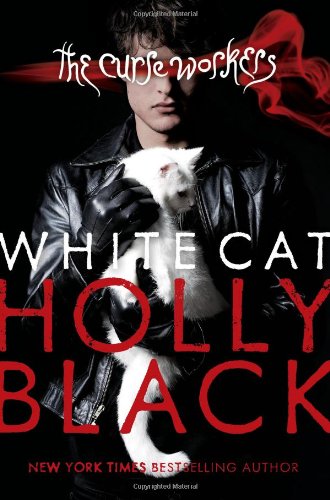
Since Holly Black wrote the Spiderwick Cronicles, I decided to listen to her presentation. Last week I’d “tweeted” and asked her which book I should read of hers as a new reader. (Some of my kids have read her Spiderwick books, and might have even seen the movie, but not me). She recommended that I read White Cat, first in her new Curse Makers series.
White Cat is an intricately plotted book based on a fascinating magic system. In this world, magic is considered bad and is run by the underground community, mainly mobsters. I don’t know if I’ll ever write a fantasy novel, but I did a ton of world-building for my WIP.
I found myself doing something that I rarely do in workshops these days—madly taking notes.
Holly Black described her world-building process as “6 crazy blue circles”. Each of her “circles” are the springboard for answering the important world-building questions.
According to Holly, coming up with a magic system that works, you must ask yourself these 6 questions:
1. Who has it?
2. What does it do?
3. How do you make it happen?
4. How is user affected?
5. How is world affected?
6. How are magic users grouped & perceived?
Holly then proceeded to answer these questions in reference to White Cat. (If you haven’t read it, this next part might not be as fulfilling. So go read it!)
1. Who has it? 1/1000 have it; it’s genetic
2. What does it do? It’s curse magic, and it can either bring luck, create dreams, change memories, affect emotions, bring physical death, cause transformation
3. How do you make it happen? Magic is transferred by bare hands touching someone’s skin (everyone wears gloves in this world)
4. How is user affected? Blow back (part of the magic blows back into the curse maker)
5. How is world affected? Magic is illegal and underground magic is controlled by the mobsters.
6. How are magic users grouped & perceived? Magic is not good and is perceived as a crime to use it.
Holly added some other great things to ask yourself during the world-building process, then concluded that it’s great to test your magic system on people who game or role play—since they are always trying to break the rules.
Tuesday, March 3, 2009
Is This a Kissing Book?
By Julie Wright
I was a guest speaker at the LTUE symposium a couple of weeks ago and oddly enough, was placed on a panel dealing with romance in the science fiction and fantasy markets.
The room was full. People wanted to know how to include good romance in their novels and what consisted of good romance. I was surprised. I didn't think anyone would show up to that panel.
What made the panel extra cool (aside from the fact that I was on it) was that Tracy and Laura Hickman were on it with me. These are people who are universally acknowledged as brilliant writers. They've won the accolades of generations worth of readers. In short, they know what they're talking about.
And the discussion went to the basic human need to be part of a companionship. Humans need love. They need to give it and receive it. And all things at their core come down to that one amazing word: LOVE.
It is no wonder that an infant deprived of affection will literally perish from a syndrome called "Failure to thrive." At the beginning of the last century, the mortality among children under two years of age, living in orphanages in Europe and in North America, was almost 100%. These children were being well taken care of physically. They had all the food and health care they needed. Yet hundreds of those babies died. At that time, they feared touching the babies would spread germs and infection. That was changed in 1920 by a pediatrician who made a rule that all babies get a certain time allotment for "mothering" every day. The mortality rate dropped dramatically. The babies only needed love in order to survive.
Love is so wired into our basic needs that we will die without it, much like we will die without oxygen and food. So, should your book have an element of romance? Maybe. Maybe not. It depends if you want to relate to your reader at a very basic emotional level or not. Part of your job as a writer is to make certain your readers can relate to the characters. If you have aliens, you can't make them so alien that the reader cannot connect with them, or you fail as a writer.
At the beginning of Princess Bride, the young sick boy interrupts his grandfather and says with a great deal of accusation, "Is this a kissing book?"
When Grandpa gets to the kissing part, he stops reading, but is encouraged to continue by the same child who had already declared he wanted nothing to do with kissing. Why the change?
Because even at his young age, and feeling a little hesitant to step into something that might brand him as a sissy, the child recognized that true love really does conquer all.
And I'm not saying you have to have kissing and sex in your novel--I'm saying you need love. That love can come from a relationship between a man and woman, a mother and daughter, two best friends willing to die to save each other--it can come from any relationship where two humans let go of their own pride long enough to find something worth living for.
You might find yourself saying, "Well, this is a historical book." What? People didn't love each other historically? Or maybe you're writing a war novel. Do you think people give up their basic needs just because they are in a war?
Even the Grinch needed his heart to grow in order to find his happy ending.
No, you don't always have to include romance (in the strict sense of boy meets girl), but if you want your book to strike that perfect chord of poetry where you have spoken to your reader in a language they will always understand, you'd better make certain to remember Love.
I was a guest speaker at the LTUE symposium a couple of weeks ago and oddly enough, was placed on a panel dealing with romance in the science fiction and fantasy markets.
The room was full. People wanted to know how to include good romance in their novels and what consisted of good romance. I was surprised. I didn't think anyone would show up to that panel.
What made the panel extra cool (aside from the fact that I was on it) was that Tracy and Laura Hickman were on it with me. These are people who are universally acknowledged as brilliant writers. They've won the accolades of generations worth of readers. In short, they know what they're talking about.
And the discussion went to the basic human need to be part of a companionship. Humans need love. They need to give it and receive it. And all things at their core come down to that one amazing word: LOVE.
It is no wonder that an infant deprived of affection will literally perish from a syndrome called "Failure to thrive." At the beginning of the last century, the mortality among children under two years of age, living in orphanages in Europe and in North America, was almost 100%. These children were being well taken care of physically. They had all the food and health care they needed. Yet hundreds of those babies died. At that time, they feared touching the babies would spread germs and infection. That was changed in 1920 by a pediatrician who made a rule that all babies get a certain time allotment for "mothering" every day. The mortality rate dropped dramatically. The babies only needed love in order to survive.
Love is so wired into our basic needs that we will die without it, much like we will die without oxygen and food. So, should your book have an element of romance? Maybe. Maybe not. It depends if you want to relate to your reader at a very basic emotional level or not. Part of your job as a writer is to make certain your readers can relate to the characters. If you have aliens, you can't make them so alien that the reader cannot connect with them, or you fail as a writer.
At the beginning of Princess Bride, the young sick boy interrupts his grandfather and says with a great deal of accusation, "Is this a kissing book?"
When Grandpa gets to the kissing part, he stops reading, but is encouraged to continue by the same child who had already declared he wanted nothing to do with kissing. Why the change?
Because even at his young age, and feeling a little hesitant to step into something that might brand him as a sissy, the child recognized that true love really does conquer all.
And I'm not saying you have to have kissing and sex in your novel--I'm saying you need love. That love can come from a relationship between a man and woman, a mother and daughter, two best friends willing to die to save each other--it can come from any relationship where two humans let go of their own pride long enough to find something worth living for.
You might find yourself saying, "Well, this is a historical book." What? People didn't love each other historically? Or maybe you're writing a war novel. Do you think people give up their basic needs just because they are in a war?
Even the Grinch needed his heart to grow in order to find his happy ending.
No, you don't always have to include romance (in the strict sense of boy meets girl), but if you want your book to strike that perfect chord of poetry where you have spoken to your reader in a language they will always understand, you'd better make certain to remember Love.
Monday, April 28, 2008
On Writing Fantasy--genre toolbox
By Julie Wright
On Writing Fantasy
Genre Toolbox
In every genre, there are important tools to use for writing in that genre. I am going to spend the next couple of weeks doing a genre toolbox for a few of the genre's that I know intimately. I'm starting with fantasy since that is what I'm currently working on.
• Magic system-- Create rules for your magic system. Where did your magic come from? Who controls the magic? Does your magic have limits? Does it cost your characters anything to use that magic?
• Plot-- I don’t care how cool your world is if nothing cool is happening there. No matter the genre, plot is essential.
• Characters—I don’t care how cool your world is if I can't relate to the characters. Even if you have dwarfs and elves and creatures we can't pronounce, you need to make them relatable on a human level.
• World building-- Even when you turn our world upside down, you have to build it up again in some new way that works for the story and is believable. If you are building a new world from scratch, then write yourself a research paper on the populations of that world. Draw yourself a map of that world. Explain what kinds of plants grow on that world, and what the people of that world eat. What do people do for a living? Is that world ruled by a king or a queen? Is it governed by the people? Does chaos rule supreme? Never underestimate world building. Most of the background history will never be used in the book, but you as the author MUST know your own world if you want the reader to believe it exists.
• Biology/science-- Just because this is fantasy doesn’t mean there are no rules. The science of the world needs to make sense. If you have a purple land-roving-squid with twenty tentacles and two legs, there better be some logical believable reasoning behind it.
• Industry knowledge-- Fantasy now-a-days is so much more than middle earth. If the most current fantasy book you’ve read is Tolkien, then you don’t know your field. Research the Hugo and Nebula award winners. Know what is being published so you don’t fall into the trap called: “Yawn, that is so yesterday’s story.”
• Reinvent the wheel. Don’t be afraid to retell an old fable or myth from a fresh point of view. Think how many times Cinderella has been remade; consider the success of Shannon Hale’s Goose Girl.
• Imagine it. Close your eyes. Can you see your world, hear the dialect of your people? Do you understand the pressures and stresses in your character's daily life as they move throughout the world you've created for them?
Meet me back here next week for the romance toolbox.
On Writing Fantasy
Genre Toolbox
In every genre, there are important tools to use for writing in that genre. I am going to spend the next couple of weeks doing a genre toolbox for a few of the genre's that I know intimately. I'm starting with fantasy since that is what I'm currently working on.
• Magic system-- Create rules for your magic system. Where did your magic come from? Who controls the magic? Does your magic have limits? Does it cost your characters anything to use that magic?
• Plot-- I don’t care how cool your world is if nothing cool is happening there. No matter the genre, plot is essential.
• Characters—I don’t care how cool your world is if I can't relate to the characters. Even if you have dwarfs and elves and creatures we can't pronounce, you need to make them relatable on a human level.
• World building-- Even when you turn our world upside down, you have to build it up again in some new way that works for the story and is believable. If you are building a new world from scratch, then write yourself a research paper on the populations of that world. Draw yourself a map of that world. Explain what kinds of plants grow on that world, and what the people of that world eat. What do people do for a living? Is that world ruled by a king or a queen? Is it governed by the people? Does chaos rule supreme? Never underestimate world building. Most of the background history will never be used in the book, but you as the author MUST know your own world if you want the reader to believe it exists.
• Biology/science-- Just because this is fantasy doesn’t mean there are no rules. The science of the world needs to make sense. If you have a purple land-roving-squid with twenty tentacles and two legs, there better be some logical believable reasoning behind it.
• Industry knowledge-- Fantasy now-a-days is so much more than middle earth. If the most current fantasy book you’ve read is Tolkien, then you don’t know your field. Research the Hugo and Nebula award winners. Know what is being published so you don’t fall into the trap called: “Yawn, that is so yesterday’s story.”
• Reinvent the wheel. Don’t be afraid to retell an old fable or myth from a fresh point of view. Think how many times Cinderella has been remade; consider the success of Shannon Hale’s Goose Girl.
• Imagine it. Close your eyes. Can you see your world, hear the dialect of your people? Do you understand the pressures and stresses in your character's daily life as they move throughout the world you've created for them?
Meet me back here next week for the romance toolbox.
Subscribe to:
Posts (Atom)


 Posts
Posts


